
THE STUDIES:
Li, Y., Yang, L., Wang, X., Wang, M., Chen, S., & Zhang, Y. (2026). Effects of physical activity on executive function in children with attention-deficit/hyperactivity disorder: A scoping review. Frontiers in Psychology, 17, Article 1629636. https://doi.org/10.3389/fpsyg.2026.1629636
Hattabi, S., Forte, P., Kukic, F., Bouden, A., Have, M., Chtourou, H., & Sortwell, A. (2022). A randomized trial of a swimming-based alternative treatment for children with attention deficit hyperactivity disorder. International Journal of Environmental Research and Public Health, 19(23), 16238. https://doi.org/10.3390/ijerph192316238
Recently, I started seeing claims on social media that swimming is a particularly good sport for children who have been diagnosed with ADHD.
As a former swimmer, I could certainly think of a few reasons why that might be true!
Swimming requires sustained attention, body awareness, coordination, following directions, and learning complex movement patterns. It's also highly structured while still allowing for movement and energy expenditure. I also found myself wondering about the role of rhythmic, bilateral movement—the continuous left-right coordination required in swimming that some readers may recognize as somewhat similar to the bilateral stimulation used in EMDR therapy.
Despite all that, as a therapist, I try to be careful about accepting claims simply because they sound plausible. So this week's Research Thursday was inspired by a simple question:
Is there actually any research supporting the idea that swimming may be beneficial for children with ADHD?
As it turns out, there is!
Let's dive in (pun *fully* intended)!
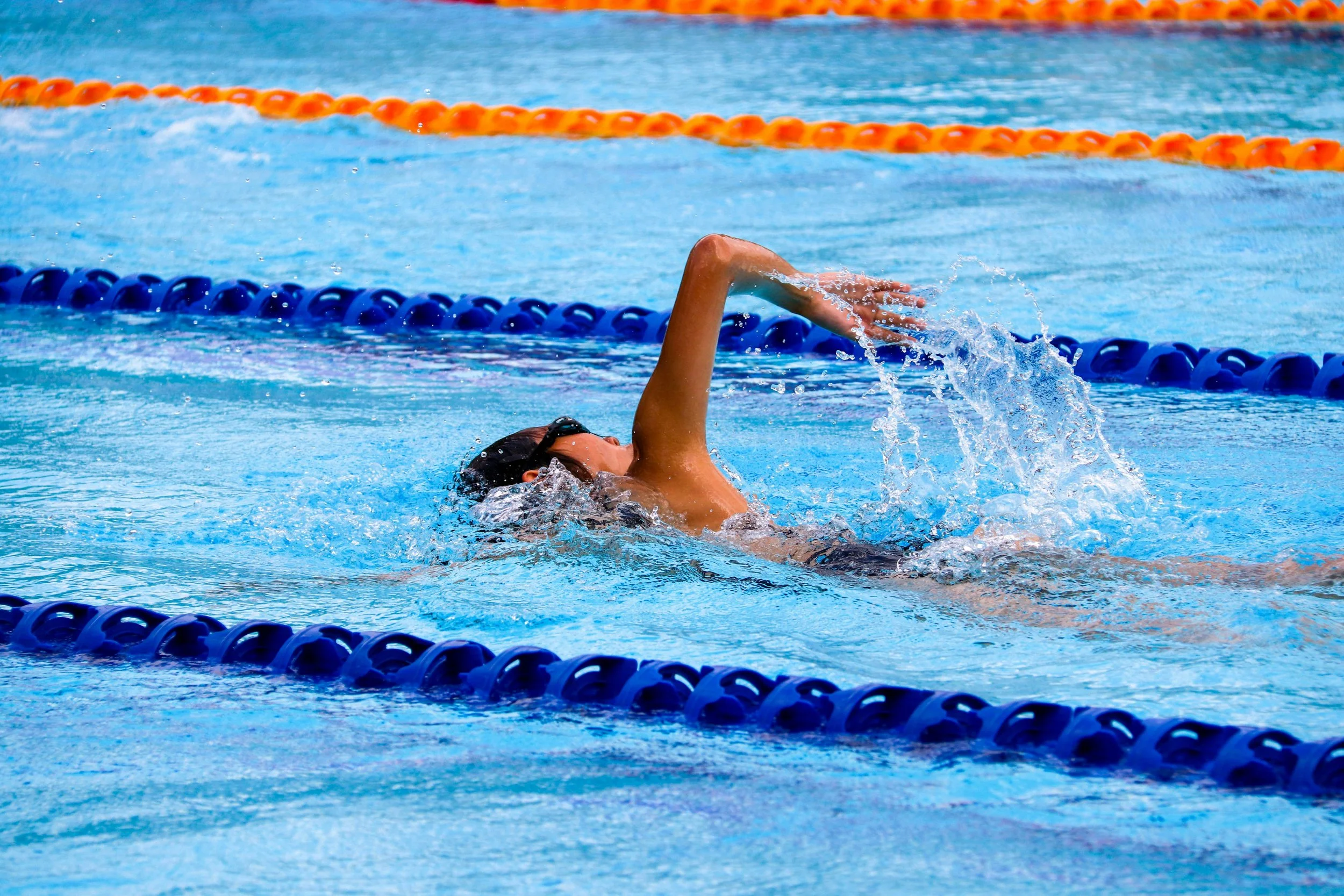
Because this topic is still relatively niche, I decided to include two studies this week. The first provides a high-level overview of what researchers know about physical activity and ADHD overall. The second takes a closer look at swimming specifically, helping address the question that sparked this whole rabbit hole in the first place!
Study #1: What Does the Bigger Picture Tell Us?
What Did the Researchers Set Out to Study?
Researchers conducted a large review of 55 studies involving children with ADHD to better understand whether physical activity improves executive functioning.
Executive functioning refers to skills such as:
Attention
Impulse control
Working memory
Cognitive flexibility
Self-regulation
Who Participated?
The review included 3,863 children ages 6–12 with ADHD across 55 separate studies.
What Was The Research Process?
Researchers examined a wide variety of physical activities, including running, cycling, team sports, swimming, movement-based games, and other exercise programs. They compared how different types of physical activity impacted ADHD-related symptoms and executive functioning skills.
What Did They Find?
The findings were remarkably consistent:
Physical activity was associated with improvements in executive functioning, particularly:
Impulse control
Working memory
Cognitive flexibility
Attention
Interestingly, the review did not identify a single "best" sport or activity for ADHD. Instead, researchers found that activities tended to be most beneficial when they combined physical movement with cognitive engagement.
In other words, activities that required children to learn new skills, solve problems, follow directions, coordinate movements, adapt to changing situations, and stay mentally engaged often showed the strongest effects.
This caught my attention because swimming appears to check many of those boxes. Learning strokes, coordinating breathing and movement, following instructions, developing new skills, and maintaining focus all require children to engage both their bodies and their brains at the same time.
Which brings us to the second study...
Study #2: What Happens When Children with ADHD Participate in a Swimming Program?
What Did the Researchers Set Out to Study?
Researchers wanted to investigate whether a structured swimming program could improve cognitive functioning, behavior, and academic performance in children with ADHD.
Who Participated?
The study included 40 children ages 9–12 who had been diagnosed with ADHD.
Children were randomly assigned to either:
A swimming intervention group
A control group
What Was The Research Process?
The swimming group participated in a 12-week program consisting of:
Three sessions per week
Ninety minutes per session
Swimming instruction
Aquatic games
Relay races
Obstacle courses
Skill-building activities
What Did They Find?
Compared to the control group, children who participated in the swimming program showed statistically significant improvements in:
ADHD-related behaviors
Impulse control
Cognitive functioning
Reading performance
Math performance
Overall academic achievement
The improvements weren't limited to behavior alone. Children appeared to be functioning better across multiple areas of life!
How Can We Use This Information?
One of the things I appreciate about this research is that it shifts the conversation away from trying to "fix" ADHD and toward helping children find environments where they can thrive.
Swimming won't be the right fit for every child. But these studies suggest that regular physical activity—especially activities that combine movement with skill development and cognitive engagement—may support attention, self-regulation, executive functioning, and overall wellbeing.
For parents, this may be a helpful reminder that extracurricular activities aren't just about keeping kids busy or burning off energy. The right activity can become an important source of growth, confidence, connection, and skill development.
It may also provide children with opportunities to experience success in areas where they often struggle. Many children with ADHD spend large portions of their day receiving feedback about what they forgot, missed, interrupted, or did incorrectly. Activities that allow them to build competence, develop skills, and experience mastery can be incredibly powerful.
Perhaps most importantly, these findings remind us that ADHD is not simply an attention problem. It impacts emotional regulation, executive functioning, relationships, confidence, and daily life. Because of that, interventions that support the whole child—not just symptom reduction—may have benefits that extend far beyond the pool, field, or gym.
And for children with ADHD, that can make a world of difference!
Keep the Conversation Going
Do you have a child diagnosed with ADHD who has found a sport or activity that seems to be a particularly good fit? I'd love to hear about it!
And if you're looking for support helping your child navigate ADHD, emotional regulation, anxiety, confidence, or other challenges, I'm happy to help. Feel free to explore my Child Counseling page or schedule a free 15-minute consultation call to explore working with me.