Counseling for Kids
Your kid is anxious, overwhelmed, melting down or lashing out.
Let’s help them find their way back to steady.
The way anxiety shows up in children is as varied and wide as the personalities of children themselves.
Maybe you’ve noticed your child worrying more than usual, asking the same questions again and again, or getting stuck in loops of “what if?”
Transitions might feel harder, certain situations get avoided, and things that once felt easy now take more effort.
Sometimes anxiety looks like perfectionism or needing things to feel “just right” in order to settle down.
Other times it comes out as irritability, withdrawal, or big feelings that seem to explode out of nowhere.
And, often, anxiety just looks like anger — sharp edges on the outside masking something more tender underneath.
Woven through all of this is a nervous system working overtime. Your kid is trying to stay in control, anticipate what’s next, and make sense of feelings and sensations that are arriving faster than they can process and hold.
They’re exhausted.
And so are you.
I get it. Let’s work together to help restore some peace and confidence.

My Counseling Approach
When I work with kids, I’m holding two things at once.
First, I focus on a “bottom-up” approach as the foundation of our work together. This means that we start with your child’s nervous system — helping their body regulate to feel safer, calmer, and less overwhelmed — because that’s what everything else builds on. When a child feels safe and settled in their body, they have more access to their thinking brain, more creativity and flexibility, a greater ability to express themselves, and access to the skills they’re learning in real life.
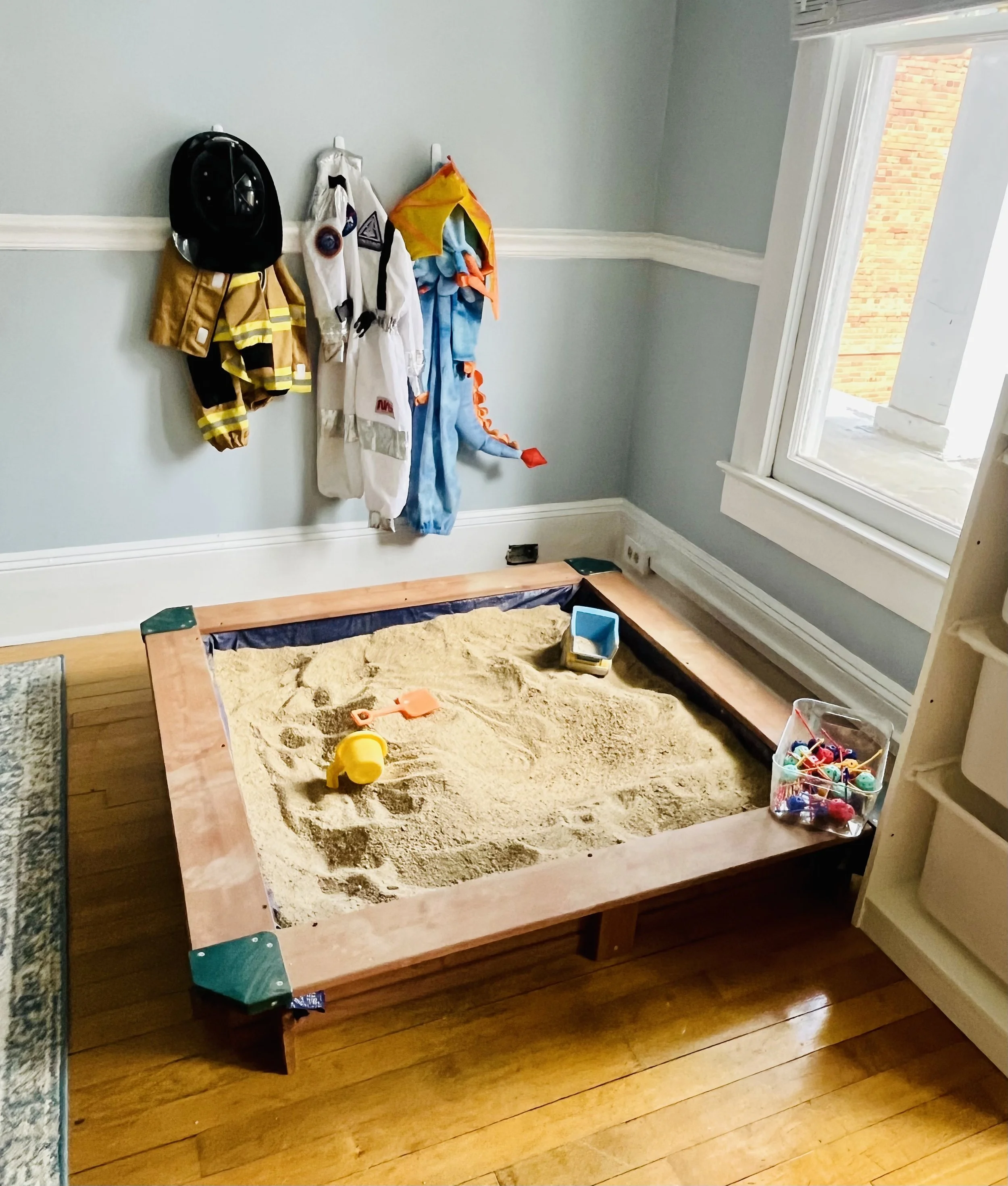
A major part of establishing nervous system safety for your child is through the building of the therapeutic relationship. Some kids have learned to trust me by throwing things at me, getting loud, and carefully observing my response. Others have spent entire sessions in the sandbox, burying and digging up toys, without ever speaking a single word.
However your child shows up, I bring a calm, attuned, unhurried presence. Over time, your child will learn that the playroom is a place where they don’t have to perform, get it “right,” or hold it all together — and that sense of safety is what allows the deeper work to unfold.
From there, we can layer in practical tools and supports that they can use day-to-day. I support your child in noticing and understanding their sensations, thoughts, and behaviors so things feel less confusing and more manageable over time.
Child Therapy by Age & Stage
With younger kids (ages 3-8), therapy exclusively looks like play.
Through Child-Centered Play Therapy (CCPT), your child leads our sessions in play while I support them in expressing, processing, and making sense of their inner world in a way that fits their developmental stage. Play is their language, toys are their words, and that gives me a window into what they’re carrying and a way to gently help them work through it.
With older kids (9+), I weave in more direct conversation and skill-building, while still paying close attention to what your child’s choices, actions, and nervous system are communicating.
You won’t be on the sidelines in this process! Regardless of your child’s age, I typically meet with parents/guardians every 3–4 sessions to share themes, offer insight and guidance, and help you feel more confident supporting your child at home. Research shows (and our intuition knows!) that therapy works best when it’s collaborative with families.
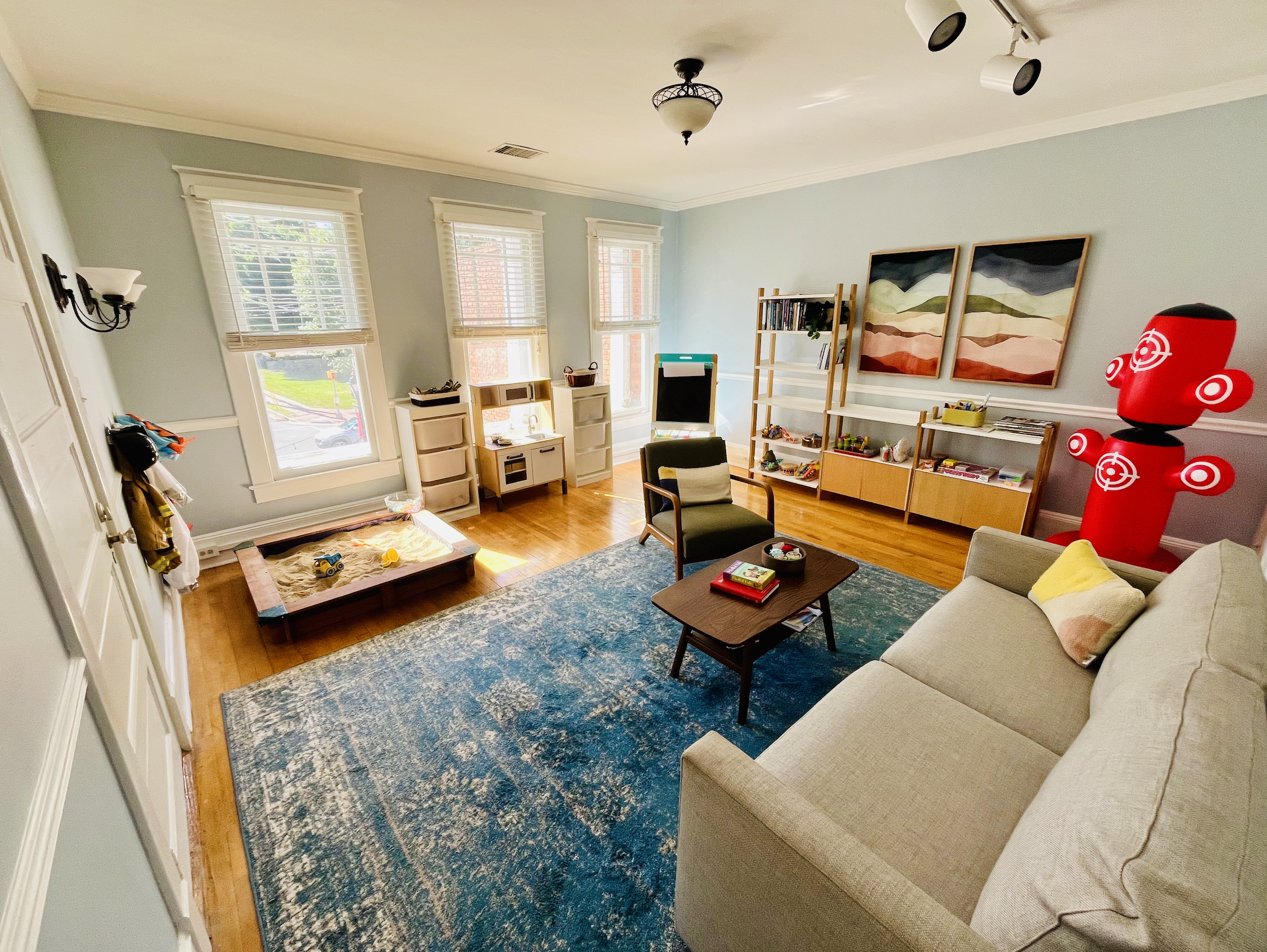
Welcome to the Playroom!
Check out Articles I’ve Written About Children & Parenting